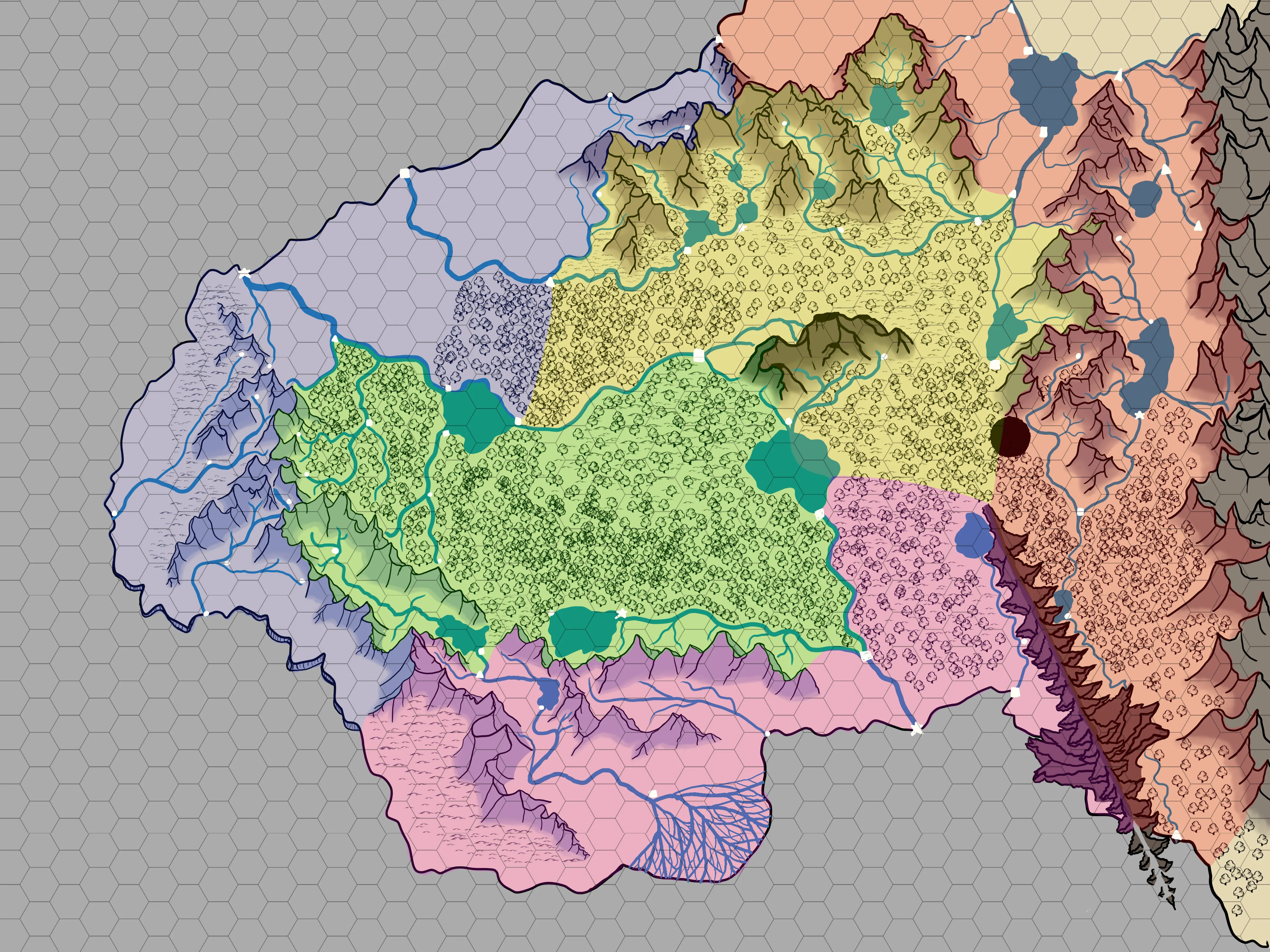
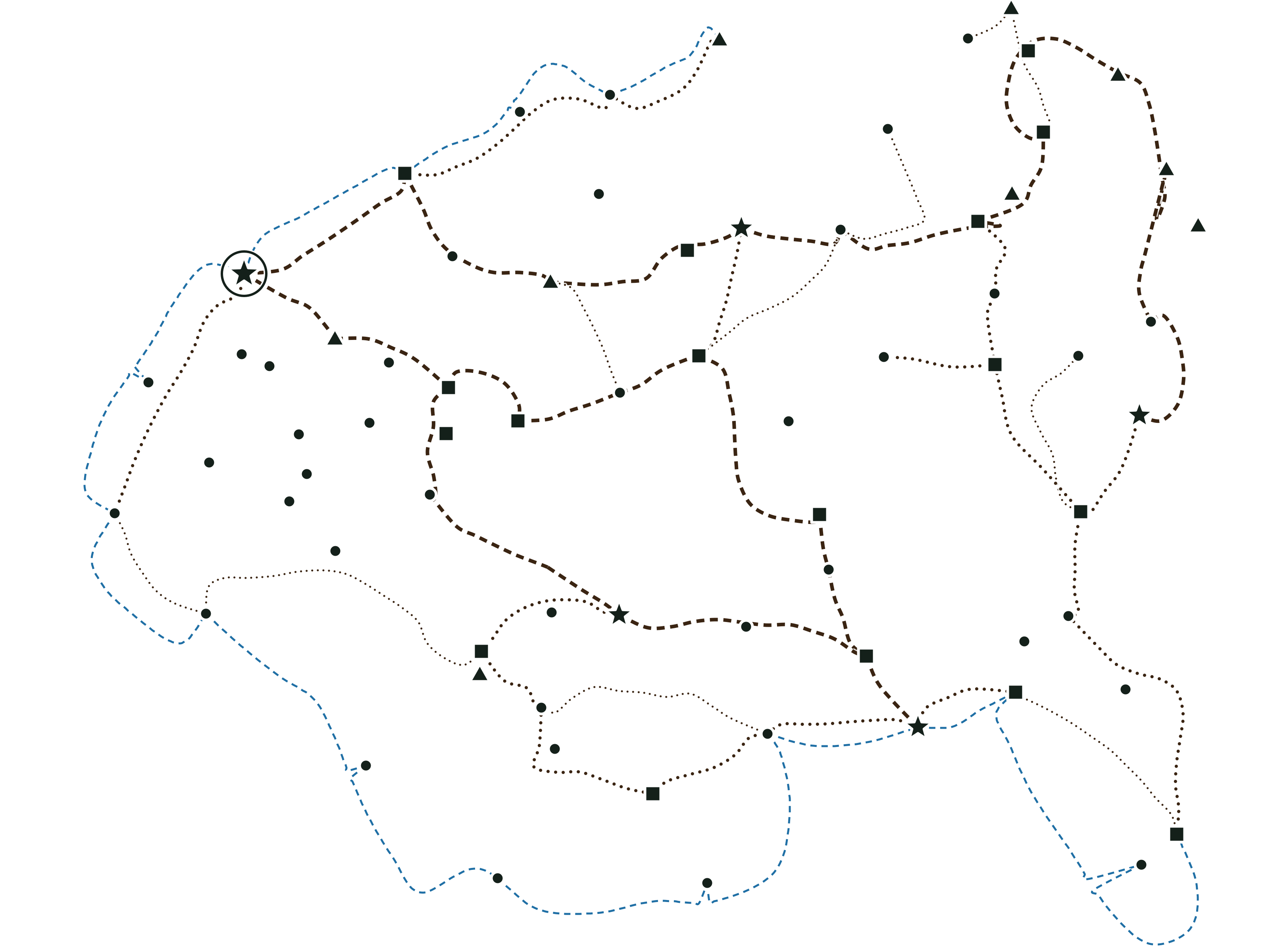
Universal rules for sailing a ship by water or by sky, adapted from Ghosts of Saltmarsh. Anything marked (Skyship) or (Water ship) applies to that kind only. The DM may create their own regional travel encounters, weather, DCs and hazards. The trip is split into journey legs to keep things simple. A leg may represent multiple days of travel at once.
Officers and Crew
Each vessel requires people to run it: the officers in charge and the sailors who follow their orders.
Types of Officers:
If you’d like to explore running a ship, it needs officers to oversee its operations—officers who fill six different roles. Some roles aboard a ship reflect the need for trained experts to direct a crew’s efforts. Other roles focus on keeping the crew’s health and morale in order. The roles are meant to provide a sense of the types of ability checks useful to managing a ship. Of these, though, captain is the only role that must be filled for the ship to function. A ship needs a single person to issue orders and respond to threats, otherwise a ship risks chaos and confusion during a crisis.
Each type of officer is described below, along with the abilities and proficiencies that help a character excel in that role:
- Captain. The captain issues orders. The best captains have high Intelligence and Charisma scores, as well as proficiency with water vehicles and the Intimidation and Persuasion skills.
- First Mate. This specialist keeps the crew’s morale high by providing supervision, encouragement, and discipline. A first mate benefits from a high Charisma score, as well as proficiency with the Intimidation and Persuasion skills.
- Bosun. The bosun (or boatswain) provides technical advice to the captain and crew and leads repair and maintenance efforts. A good bosun has a high Strength score, as well as proficiency with carpenter’s tools and the Athletics skill.
- Quartermaster. The quartermaster plots the ship’s course, relying on knowledge of nautical charts and a study of weather and sea conditions. A reliable quartermaster tends to have a high Wisdom score, as well as proficiency with navigator’s tools and the Nature skill.
- Surgeon. The ship’s surgeon tends to injuries, keeps illnesses from spreading throughout the ship, and oversees sanitation. A capable surgeon benefits from a high Intelligence score, as well as proficiency with herbalism kits and the Medicine skill.
- Cook. A ship’s cook works with the limited ingredients aboard a ship to make meals. A skilled cook keeps the crew’s morale in top shape, while a poor one drags down the entire crew’s performance. A talented cook has a high Constitution score, as well as proficiency with brewer’s supplies and cook’s utensils.
Other Roles
Beyond its officers, a ship’s company often assigns the following duties to specific members of the crew:
- Pilot. The pilot takes the helm and steers the ship through obstacles, into port, and around the enemy in battle. Often the captain or first mate takes this role. A steady pilot has a high Intelligence score, as well as proficiency with air vehicles (for a skyship) or water vehicles (for a water ship).
- Lookout. From the crow’s nest or the bow, the lookout watches for obstacles before the ship strikes them. A sharp-eyed lookout benefits from a high Wisdom score and proficiency in the Perception skill.
- Kryst-Tender (Skyship). The kryst-tender tracks the ship’s remaining flight time and keeps its Himinkryst in balance. A good kryst-tender has a high Intelligence score and proficiency in the Arcana skill.
- Bard. Long voyages wear on a crew, and a bard who can lead a shanty keeps spirits up and hands working in time. A rousing bard has a high Charisma score and proficiency in the Performance skill or with a musical instrument.
Crew Members
A ship requires a number of able-bodied sailors to crew it, as specified in its stat block. A crew’s skill, experience, morale and health are defined by its quality score. This score can affect a number of general ship activities, like the crew’s ability to notice threats or contend with hazards. A crew starts with a quality score of +4, but that score varies over time, going as low as −10 and as high as +10. It decreases as a crew takes casualties, suffers hardship, or endures poor health. It increases if the crew enjoys high morale, has good health care, and receives fair leadership.
Traveling
A voyage is run as a series of legs, with the crew working in shifts to keep the ship moving around the clock.
Journey Legs
A voyage is divided into legs. Each leg is a stretch of travel, usually several days long, that ends with a pair of navigation checks: one made during the day and one at night. The number of legs depends on the length of the voyage, as shown on the Voyage Legs table.
| Voyage | Legs |
|---|---|
| Short (1–3 days) | 1 |
| Medium (4–6 days) | 2 |
| Long (7+ days) | 3, plus 1 for every 2–4 days beyond the first week |
| Through a hazardous region | 1 every day |
Whenever the ship is driven off its course (by combat, a chase, a storm, or a detour), the quartermaster makes one additional navigation check.
Sequence of a Leg
Resolve each leg in the following order. Navigation comes last, since nearly everything that happens before it can make it harder or easier.
- Assign Roles. Each member of the crew takes up a role. The captain and first mate can each attempt a Rally, and the bard can lead a Shanty.
- Determine Weather. The DM sets the weather or rolls on the region’s weather table. Note the visibility, which sets the DCs for the lookout and the quartermaster.
- Meals. The cook makes one check, and the surgeon treats any sickness among the crew.
- Maintenance. The bosun makes one maintenance check. On a failure, a mishap occurs.
- Check for Obstacles. The DM determines if there are obstacles on the route or they may do so randomly. The lookout attempts to spot it, the sail crew works the sails, and the pilot attempts to steer clear of it.
- Navigation. The quartermaster makes a day check and a night check, applying any penalties.
- Getting Lost. If either navigation check failed by 5 or more, the ship is lost.
Order of Checks
When one role’s check can affect another’s, the role that influences it goes first. The sections below are listed in that order:
- Captain, first mate, and bard Rally and lead a Shanty before anyone else rolls, since their bonuses apply to the whole leg.
- Cook feeds the crew before the day’s work begins, since a good meal grants a bonus to every crew check.
- Surgeon treats a sick crew before the quartermaster plots a course.
- Bosun makes the maintenance check before the pilot takes the helm, since a jammed lever or an unbalanced crystal hinders piloting. The kryst-tender then rebalances any drifting crystal.
- Lookout spots an obstacle, then the sail crew works the sails, then the pilot steers.
- Quartermaster navigates last, after every penalty for the leg is known.
If the ship lacks the crew to follow this order, or two checks don’t affect each other, they are made in whatever order the characters attempt them.
Shifts
A leg usually represents several days of travel. The ship has the option to sail around the clock; doing so requires a shift change to allow most of the crew to take a break. Any of the crew may have the option to take the night shift. They spend the day resting and the night doing their duty.
While only the lookout is required for a night shift, having a pilot or quartermaster is highly recommended. (Skyship) A pilot is required too, because someone has to hold the ship’s altitude all night. Without the required roles, the ship holds position overnight (see Navigation).
- Waking someone: any other check that comes up at night with nobody on that shift (piloting, navigation, repairs) means waking whoever holds the role by day. That check has disadvantage. Being woken doesn’t count as a double shift for the whole leg.
- Double shift: anyone who works both a day shift and a night shift is worn down for the whole leg:
- No long rest during the leg.
- −2 to every check they make for the leg.
- Exhaustion: at the end of each day of the leg, a CON save, DC 10 +2 for each earlier day of double shifts in a row, or gain 1 level of exhaustion. Example: on day 3 of a double shift, the DC is 14.
- A long rest resets the count.
Command & Morale
Officer Actions (Captain & First Mate):
Rally: once per leg, the captain and the first mate can each make a DC 12 Charisma (Persuasion or Intimidation) check. On a success they can give any role advantage on their checks for that leg.
Combat Actions:
- Take Aim: as an action, a ship’s weapon within 10 ft. gets advantage on its next attack.
- Full Speed Ahead: as an action, the ship’s speed goes up by 1d6 × 5 ft. until the end of its next turn.
Bard Actions (Bard):
Shanty: once per leg, the bard makes a DC 12 Charisma (Performance) check to boost the crew’s morale for the leg.
| Result | Effect this leg |
|---|---|
| Succeed by 5+ | +3 to every crew check |
| Success | +1 to every crew check |
| Fail | No effect |
Long voyages: if the bard succeeds on every leg of a trip, NPC crew quality goes up by 1 when the ship arrives.
Meals and Health
A crew without a cook gets by on rations, which grant no bonus and impose no penalty.
Cook. Once per leg, the cook makes a DC 12 Constitution check using cook’s utensils. Consult the Shipboard Meals table for the result.
| Result | Effect This Leg |
|---|---|
| Succeed by 10 or more | Feast. +2 bonus to every crew check, and each member of the crew gains 1d8 temporary hit points |
| Succeed by 5–9 | Hearty. +2 bonus to every crew check |
| Success | Good Meal. +1 bonus to every crew check |
| Fail by 1–4 | Edible. No effect |
| Fail by 5 or more | Bad Batch. The crew falls sick. The DC of the leg’s navigation checks increases by 2, and the crew’s quality score decreases by 1 |
Surgeon. A sick crew recovers if the surgeon succeeds on a DC 12 Wisdom (Medicine) check. The surgeon also tends to anyone injured in collisions and falls.
Maintenance and Repairs
Maintenance
Once per leg, the bosun makes an Intelligence check using carpenter’s tools to keep the ship in good repair. The DC is 10, or 13 if the ship weathered a storm, fought a battle, or suffered a collision during the leg. On a failed check, roll on the Mishaps table. A mishap left unfixed increases the DC of the leg’s navigation checks by 2.
| d6 | Mishap | Fix |
|---|---|---|
| 1 | Jammed Steering. A lever (or the rudder) seizes. The pilot has disadvantage on piloting checks. | DC 12 Intelligence check using carpenter’s tools (1 hour) |
| 2 | (Skyship) Unbalanced Crystal. A crystal drifts out of balance. The pilot has disadvantage on piloting checks. (Water Ship) Leak. Speed decreases by 10 feet. | Crystal: DC 13 Intelligence (Arcana) check by the kryst-tender. Leak: DC 12 Intelligence check using carpenter’s tools (1 hour), or mending |
| 3 | Torn Sail. Speed decreases by 10 feet. | DC 12 Intelligence check using carpenter’s tools (1 hour) |
| 4 | Snapped Rigging. | DC 12 Strength (Athletics) check, or one casting of mending |
| 5 | Cracked Seam. The hull loses 10 hit points. | 50 gp at the next port, or mending followed by a shoring check |
| 6 | Lost Supplies. Stores spoil, or tools go overboard. | Restock at the next port |
Repairs
Field Repairs. A character can spend 1 hour working on one damaged component with carpenter’s tools and 10 gp worth of spare timber, canvas, and pitch. At the end of the hour, the character makes a DC 12 Intelligence check (DC 15 in a storm, or if the component has fewer than half its hit points). On a success, the component regains 2d10 hit points. On a failure, the hour makes no progress.
Mending. The mending spell closes one break or tear up to 1 foot in any dimension, using no supplies. On its own, the spell only closes the gap. A character must then shore up the mended part with a successful DC 12 Intelligence check using carpenter’s tools, and the component regains 1d10 hit points. Mending can’t repair magic (such as an unbalanced crystal) or anything that isn’t broken (such as jammed steering).
Limits at Sea. Away from port, field repairs and mending can’t restore a component above three-quarters of its hit point maximum. The rest of the work requires a dock or a shipwright.
Optional: long tears and seams
As written, mending only fixes a break up to 1 ft., so a long sail tear or split seam is out of reach. If you allow it, the caster works one foot per casting: 1d6 castings, then one shoring check for the whole repair. This makes a crew member with mending very valuable aboard.
Flight Time (Skyship)
A skyship that relies on a limited flight source, such as Himinkryst, must track how many hours of flight it has left. The kryst-tender keeps this count using the rates in the ship’s stat block, and can rebalance a damaged or drifting crystal with a successful DC 13 Intelligence (Arcana) check.
- Sailing or Gliding. The ship spends flight time at the rate given in its stat block. For example, a ship with “24 hours of levitation or 4 days gliding” spends 6 hours of flight time for each day it glides.
- Hovering or Powered Flight. A ship that hovers, or moves on its flight source alone, spends 1 hour of flight time for each hour.
- Recharging. Follow the ship’s stat block. Every Himinkryst must be active while the ship is airborne, so a skyship recharges only once it has landed or moored and switched its crystals off (see Ship General Info).
Travel times assume the ship sails around the clock, so any delay eats into its spare flight time. If every flight source runs dry, the ship falls (see Rule - Fall Damage (Revised)).
Obstacles
An obstacle is anything physically in a ship’s path: drifting debris or another vessel; an island, a cliff face, or a flock of birds for a skyship; a reef, a rocky shoal, or ice for a water ship. Storms, downdrafts, and similar hazards arise from the weather and encounters.
Spotting Obstacles
When an obstacle appears, the lookout makes a Wisdom (Perception) check. The DC depends on visibility, as shown on the Spotting Obstacles table. If no one is serving as lookout, use the highest passive Wisdom (Perception) score among creatures on deck, with a −5 penalty.
| Visibility | DC |
|---|---|
| Clear | 12 |
| Lightly obscured | 16 |
| Heavily obscured, or night with no light or darkvision | 20 |
| Night and heavily obscured | Can’t be spotted |
A spotted obstacle gives the ship 300 feet of warning, and the pilot can avoid it with a successful DC 12 piloting check. An obstacle that goes unspotted gives only 60 feet of warning, and the DC to avoid it rises to 16.
Lookout Aids
Certain equipment and experience help a lookout. An aid grants advantage on the check, or improves visibility by one step on the Spotting Obstacles table.
- Spot Lantern. At night, obstacles within the lantern’s beam count as one step better.
- Spyglass. The lookout has advantage on the check when visibility is clear or lightly obscured.
- Darkvision. A lookout with darkvision ignores darkness, but not cloud or fog.
- Knowledge of the Route. A lookout who has made the voyage before has advantage on the check.
- Sounding Line (Water Ship). The lookout has advantage on checks to detect reefs, shoals, and sandbars.
Sails
The bosun and sail crew handle the ship’s sails and rigging with Strength (Athletics) checks, as shown on the Sail Tasks table. Climbing the rigging requires no check, except in a storm or when the lines are iced over, which requires a DC 12 Dexterity (Acrobatics) check.
| Task | When | DC | On a Failure |
|---|---|---|---|
| Work the sails | Right before a piloting check | 12 | The pilot doesn’t gain advantage |
| Reef the sails | In a squall or storm | 13 (group check) | The sails take 2d10 damage (speed decreases by 5 feet for every 25 damage) |
| Clear ice or lines | Ice, or snapped or fouled lines | 12 (1 hour) | Speed decreases by 10 feet until cleared |
Piloting
How a skyship flies
A skyship is steered from the helm and six levers, which work the gliders, the boost and the levelling. The Himinkryst balance themselves the way an airship trims with ballast, but someone still has to manage them. One person can fly a small skyship, so it is easier to sail than a water ship, but it needs far more maintenance.
The pilot makes piloting checks to steer the ship. A piloting check is an Intelligence check, to which the pilot adds their proficiency bonus if they are proficient with air vehicles (for a skyship) or water vehicles (for a water ship).
A pilot usually makes a piloting check to avoid obstacles, hazards or just when ever a abnormal situation calls for it. Here are some examples of when to make piloting checks:
| Situation | DC |
|---|---|
| Docking, landing, or mooring in poor conditions | 10 |
| Avoiding a spotted obstacle; riding out turbulence or heavy swell | 12 |
| Coming alongside another ship; ramming, doing a combat maneuver | 15 |
| Avoiding an unspotted obstacle; pulling out of a downdraft; running a narrow channel in a storm | 16 |
| Threading an island field or reef at speed; landing on a moving island | 18–20 |
Advantage and Disadvantage. The pilot has advantage on the check if the sail crew worked the sails beforehand (see “Sails”). The pilot has disadvantage if the helm has fewer than half its hit points or, on a skyship, if a crystal is damaged or out of balance. In a storm, the DC increases by 2.
Failed Piloting Checks. When the pilot fails a piloting check to avoid an obstacle, consult the Collisions table.
| Result | Collision |
|---|---|
| Fail by 1–4 | Glancing Blow. The ship takes 100 gp worth of damage and needs 1d4 hours of repairs. In combat, the hull takes 2d10 bludgeoning damage instead. |
| Fail by 5 or more | Hard Strike. The ship takes 400 gp worth of damage and is stuck for 1d6 hours, lodged on the rock or run aground. Each creature on deck must succeed on a DC 13 Dexterity saving throw or take 2d6 bludgeoning damage and fall prone. In combat, the hull takes 4d10 bludgeoning damage instead. |
Navigation
The quartermaster keeps the ship on course by making Wisdom checks, adding their proficiency bonus if they are proficient with navigator’s tools. The quartermaster makes two navigation checks each leg: one during the day and one at night. The DC depends on the route, as shown on the Navigation DCs table.
| Route | DC |
|---|---|
| Charted, with landmarks in sight | 10 |
| Charted, with no landmarks in sight | 14 |
| Uncharted | 18 |
| Hazardous region | Set by the region |
Penalties. The DC increases for each of the following conditions that applies. Use only the worst visibility condition.
| Condition | DC Increase |
|---|---|
| Night, with no stars or moon to steer by | +5 |
| Lightly obscured | +2 |
| Heavily obscured | +5 |
| Storm | +5, and the check has disadvantage |
| The ship suffered a hard strike this leg | +2 |
| A mishap remains unfixed | +2 |
| The crew is sick | +2 |
Advantage. The quartermaster has advantage on the check if they have good charts of the route or have made the voyage before. A successful Rally can also grant advantage.
| Result | Outcome |
|---|---|
| Success | The ship stays on course. |
| Fail by 1–4 | Drift. The leg takes 1d8 hours longer. |
| Fail by 5 or more | Lost. The ship has strayed off course (see “Getting Lost”). |
Holding Position. Instead of making a night check, the ship can stop and wait for daylight. The voyage takes half a day longer. A skyship that hovers still spends flight time. A water ship drops anchor, or heaves to in deep water.
Getting Lost
A lost ship has gone the wrong way without realizing it. The voyage climbs the Distance Ladder, and the ship must make the additional legs a voyage of that length requires.
| Tier | Length | Legs | DC While Lost |
|---|---|---|---|
| Short | 1–3 days | 1 | +0 |
| Medium | 4–6 days (1d3+3) | 2 | +0 |
| Long | 7–10 days (1d4+6) | 3 | +2 |
| Far | 11–20 days (1d10+10) | 5 | +4 |
| Remote | 21–40 days (1d20+20) | 8 | +6 |
| Off the Map | 41+ days (2d20+40) | 13 | +8 |
When the ship becomes lost, follow these steps:
- Climb the Ladder. The voyage moves up 1 tier if the navigation check failed by 5–9, 2 tiers if it failed by 10 or more, or 3 tiers on a natural 1. In surroundings rich with landmarks (coastlines, peaks, rivers, towns, or island chains), it climbs 1 tier fewer, to a minimum of 1. In featureless surroundings (open ocean, unbroken cloud, or desert), it climbs 1 tier more.
- Determine the New Length. Roll the new tier’s length. The additional days are time lost.
- Make the Remaining Legs. The ship must make each leg the new tier requires that it hasn’t made yet, adding the tier’s DC While Lost to each navigation check. In a hazardous region, every additional day is an additional leg. For example, a short voyage that fails by 5 becomes medium, so the ship owes 1 more leg.
- Lost Again. If the ship fails another navigation check by 5 or more, it climbs again from its current tier.
- Determine Where It Ends Up. Roll a d8 to determine the direction the ship strayed (1 is north, continuing clockwise): 1d8. A region might instead specify where its winds or currents carry lost ships. At Far or worse, the ship might end up in another region or country entirely. If the region has an off-course table, roll on it as well.
Ship Combat
Ships in Initiative
A ship rolls initiative as a creature does, adding its Dexterity modifier and its crew’s quality score. Creatures aboard roll their own initiative and act on their own turns.
On its turn, the ship takes the number of actions listed in its stat block, such as moving or firing a weapon. These represent the crew working together, so a ship with fewer crew takes fewer actions, and a ship with no crew can’t act at all.
Ship Components
A ship is made up of components, each with its own Armor Class and hit points. Attackers choose which component to target.
- Hull. The ship’s body. If the hull drops to 0 hit points, the ship is wrecked: a water ship sinks, and a skyship falls.
- Helm (Control). Lets the ship move up to the speed of one of its movement components, with one 90-degree turn. If the helm is destroyed, the ship can’t turn.
- Movement. Sails, oars, or Himinkryst. Each component’s speed decreases by 5 feet for every 25 damage it takes.
- Weapons. Each weapon is its own component and is destroyed at 0 hit points.
Damage Threshold. A component with a damage threshold has immunity to all damage unless it takes an amount of damage from a single attack or effect equal to or greater than its threshold, in which case it takes the damage as normal.
Immunities. A ship is immune to poison and psychic damage, and to the blinded, charmed, deafened, exhaustion, frightened, incapacitated, paralyzed, petrified, poisoned, prone, stunned, and unconscious conditions.
Siege Weapons
A siege weapon such as a ballista or mangonel must be loaded and aimed before it can be fired. It takes one action to load the weapon, one action to aim it, and one action to fire it. Crew or characters standing at the weapon can take these actions.
Special Role Actions
Other members of a ship’s company can use the following actions while at their station. Unless an action says otherwise, it uses the character’s action on their own turn. The cook has no special actions, and usually crews a weapon or joins the fight.
Pilot
Evasive Maneuvers. The pilot throws the ship into a hard weave. With a successful DC 15 piloting check, attack rolls against the ship and its components have disadvantage until the start of the pilot’s next turn.
Hard About. The pilot swings the helm over. During the ship’s next Move, it can make one additional 90-degree turn. Each creature on deck that isn’t holding on must succeed on a DC 10 Dexterity saving throw or fall prone.
Lookout
Call the Shot. The lookout picks out a weak point on an enemy ship within 600 feet. With a successful DC 13 Wisdom (Perception) check, the next ship’s weapon attack that hits that ship before the end of the lookout’s next turn deals an extra 1d10 damage.
Warning Cry. As a reaction when a creature on deck that the lookout can see is targeted by an attack from off the ship, the lookout shouts a warning. The target gains a +2 bonus to AC against that attack.
Quartermaster
Read the Wind. With a successful DC 15 Wisdom check using navigator’s tools, the quartermaster finds the best line through the wind. Until the end of the ship’s next turn, its sails move at their with-the-wind speed regardless of its heading.
Plot an Escape. With a successful DC 15 Wisdom check using navigator’s tools, the quartermaster charts a way out. The ship has advantage on its next check to escape a chase or break off from combat.
Surgeon
Triage. The surgeon makes a DC 12 Wisdom (Medicine) check on a creature within 5 feet that has 0 hit points. On a success, the creature regains 1 hit point.
Field Dressing. The surgeon uses one use of a healer’s kit or herbalism kit on a creature within 5 feet. The creature regains 1d6 + the surgeon’s Wisdom modifier hit points. A creature can benefit from this action only once per combat.
Kryst-Tender (Skyship)
Kryst-Boost. The kryst-tender spends 2 hours of the ship’s flight time. During the ship’s next Move, it moves at double its Himinkryst speed.
Emergency Rebalance. With a successful DC 13 Intelligence (Arcana) check, the kryst-tender steadies an unbalanced or damaged crystal. The pilot no longer has disadvantage from that crystal until it takes damage again.
Bard
Battle Shanty. Once per combat, the bard makes a DC 12 Charisma (Performance) check. On a success, each friendly creature on deck that can hear the bard gains temporary hit points equal to 1d4 + the bard’s Charisma modifier.
Work Song. The bard sets a rhythm for the gun crews. Until the end of the bard’s next turn, one ship’s weapon within 30 feet of the bard can be loaded and aimed with a single action.